Tag: Emf Radiation And Health
Who all are vulnerable to EMF Radiation?
EMF 0 Comments Cell Towers Electromagnetic Hypersensitivity EMF-home-inspection Nashville Tennessee Home inspections Safty and Remediation
Unborn Babies, babies, toddlers, pregnant women, seniors, teens, youngsters and adults – did we miss out anyone? And then… what about computing systems, data centers, servers and computing environments?
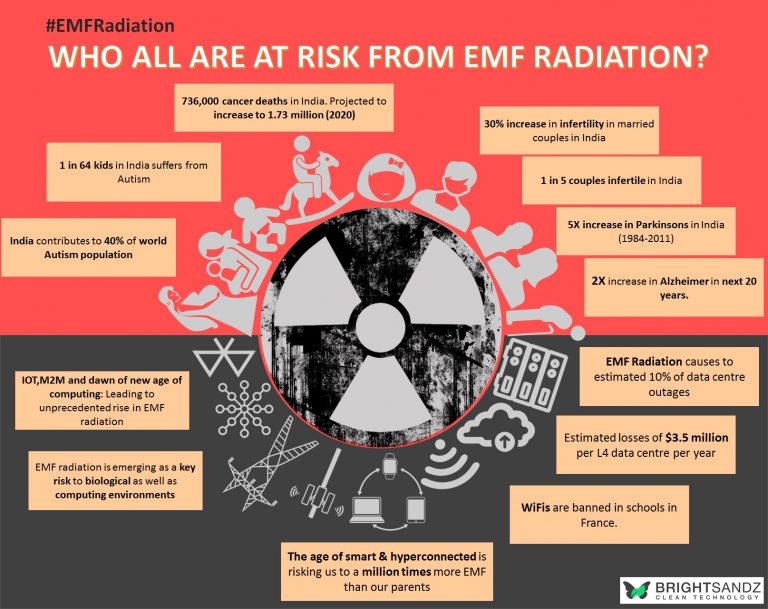
Look around. Across us is a snowballing of multiple sources of EMF at our homes, work places and other spaces such as schools, hospitals, malls, public spaces etc. The key-trends being –
- Our addiction to 24*7 hyper connectivity and the age of “smart”
- Advent of IOT, M2M and Sensor networks
- Rise of electronic consumerism
EMF radiation and EMF fields are key risks to biological and computing systems. As a generation, we have a million times higher exposure to EMF radiation compared to our parents or grandparents. Our cellphones, WiFi and microwaves are so convenient that they are actually inconvenient. Our bodies fail to evolve so quickly as the multiplication in EMF radiation fields around us. This has resulted in aggravated occurrences of critical ailments such as Alzheimers, Parkinsons, Cancer, Infertility and Autism.
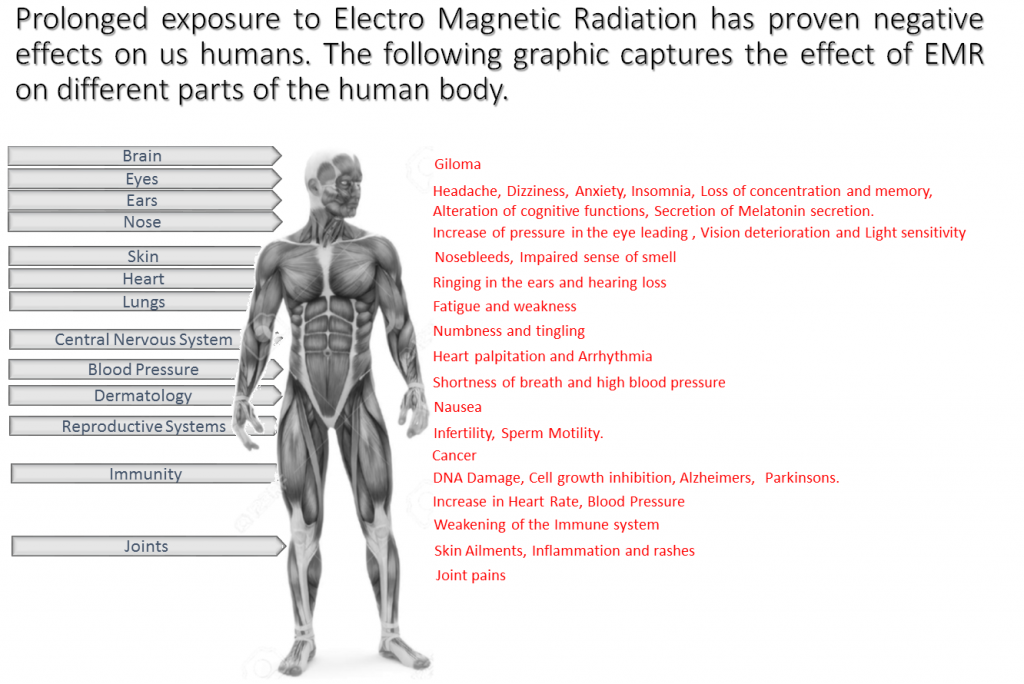
Ironically, EMF radiation has a remarkably “unproven” relationship with all these ailments. These figures point towards a global epidemic on the rise. The epidemiological evidence linking EMF radiation to these health problems is not fully formed and may take many more decades to form. However, good sense will tell you it is better to be safe than sorry.
Emf Exposure In The Workplace, Emf Exposure Issues, Emf Exposure Testing, Emf Exposure Treatment, Emf Exposure Wifi, Emf Ionizing Radiation, Emf Occupational Exposure Limits, Emf-Radiation And Health, Emf-Radiation Cancer, Emf-Radiation Cars, Emf-Radiation Effects, Emf-Radiation Electric Cars, Emf -Radiation From Wireless Internet, Emf-Radiation Meter, Emf-Radiation Protection, Emf-Radiation Research, Emf-Radiation Safe Level, Emf-Radiation Shield, Emf-Radiation Sickness Symptoms, Emf-Radiation Sources, Emf-Radiation Treatment, Emf-Radiation Wireless Routers, Emf Rf Radiation Detector
Read MoreQuitting Smoking Is Easier Than Avoiding EMF Radiation
EMF 0 Comments Electromagnetic Frequencies Electromagnetic Hypersensitivity EMF-home-inspection Nashville Tennessee Home inspections
How much more proof do we need that being online isn’t healthy for us?
 The latest terrible tech research is from Kaiser Permanente, published last week in the journal Scientific Reports. In a study of hundreds of pregnant women in the Bay Area, the authors found that those who were more exposed to the kind of radiation produced by cell phones, wireless networks and power lines were nearly three times as likely to suffer miscarriages.
It goes without saying that these electromagnetic fields, or EMFs, are around every single one of us. Thanks to our insatiable demand for social media, GPS and “smart” physical devices, there will be more and more of them every year.
I was a bit surprised by the Kaiser study’s publication.
Not because I doubt its findings — it seems sensible to assume that if radiation is powerful enough to transmit data through the ether, it’s probably powerful enough to scramble our cells as well.
Plus, I live in the Bay Area.
People who don’t live here think this place is nothing more than a magnet for any and every whiz-bang tech idea.
Those of us who actually live here know that there’s a counterveiling force of skepticism to meet every single one of those ideas.
That’s why Instacart will never replace Berkeley Bowl. It’s also why San Francisco and Berkeley — cities that are awfully friendly to technology in other ways — both passed laws requiring cell phone retailers to post warning signs about radiation, citing concerns about cancer, brain tumors and reproductive health.
But there will be tremendous pushback against any research showing how dangerous this stuff may be.
An example: San Francisco’s radiation-warning law, championed by then-Mayor Gavin Newsom, passed in 2010. But after a lawsuit from the cell phone industry, the city backed off on implementing it.
Around the same time, the California Department of Public Health drew up its set of guidelines to inform the public about the risks associated with cell phone use.
The health department then sat on these guidelines — for seven years — until The Chronicle told the state it was going to publish a news story about the case, and a judge signaled that she would order them to be released.
The reason for the delay?
The health department’s lawyers claimed the agency isn’t required to warn the public of health risks that haven’t been proved (despite the fact that the information was gathered by the agency’s own scientists). The lawyers also argued that releasing the guidelines might cause the public to panic.
Well, it might be time to start panicking. More and more, it sounds like the long-term effects of our Internet habits could be dangerous, not just for our relationships and our ability to focus, but our brains and bodies as well.
To this member of the public, the small-but-growing body of EMF research looks like anti-tobacco research must have looked in the 1950s — necessary and important work that will surely gain researchers an ugly, uphill battle against better-funded opponents.
Even more disconcerting?
Once scientists knew how dangerous tobacco was, the public could clearly and simply understand how to prevent those dangers: stop smoking.
But I’m not sure there’s any way to turn back the clock on EMFs.
I read the story about Kaiser’s new study on my cell phone, traveling between my office (which is replete with Wi-Fi networks) and my home (same). I happened to be traveling on BART, so when I put my phone down I studied the passengers around me.
Every sitting passenger was hunched over their phone, as if in prayer. The strap-hangers held their phones in front of their faces; the blue screens glided through the air like fish in an aquarium. All of this was normal, if vaguely depressing; a pageant I see and participate in every day.
But I also noticed, as if for the first time, how many people were wearing wireless Airpods and other earbuds. They wore them with a certain pride of ownership, as if they were in on a secret the rest of us were yet to learn.
I watched them, and thought about the public health guidelines that went unreleased for seven years. I thought about how the guidelines suggested removing headsets as soon as calls are over, and keeping the phone away from your body.
I thought about how many recent cell phone “improvements” chip away at that guidance. Then I lifted my phone from my lap and dropped it in my bag, out of sight.
Caille Millner is a San Francisco Chronicle staff writer. Email: cmillner@sfchronicle.com Twitter: @caillemillner