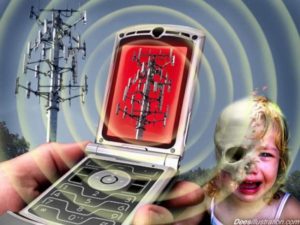
Investigates invisible risk lurking in schools WHO advisor warns of cancer time bomb fear Effects make life unbearable, claim sufferers EXCLUSIVE By Grace Macaskill
A leading cancer expert has called for a ban on school WiFi networks over fears they could put children’s health at risk.
He warned: “Radiation from mobile phones and other wireless devices can cause changes in DNA and induce cancer in experimental animals.
“Children’s skulls are thinner and absorb much more of this radiation. We ignore this at our future peril.”
Campaigners claim an increasing number of people suffer from “electromagnetic sensitivity” – leading to symptoms from a lack of concentration to headaches and nosebleeds. In one disturbing case, a 15-year-old is said to have taken her own life after being overwhelmed by tiredness, dizzy spells and even itchy skin due to WiFi networks at her school.
We also found children removed from class by their parents after they began to suffer nausea and concentration issues – and even a teacher who claims he was affected himself.
EXPOSURE
Yet Public Health England insists WiFi is safe as it uses similar frequencies to radio and TV and gives less exposure than mobiles.
And that means NHS doctors currently have no diagnosis for the condition – leaving those fearing they suffer from it with nowhere to turn.
Mum Debra Fry told how her daughter Jenny killed herself after developing the WiFi “allergy”.
The 15-year-old hanged herself from a tree following two years of crippling tiredness, headaches and even bladder problems.
Debra, 57, said: “I believe she just couldn’t take any more. She had overwhelming fatigue, headaches and ear pressure, difficulty finding words, itchy skin, dizziness and stiff joints.
“She was getting into trouble at school because she couldn’t concentrate and needed to urinate more than usual, so was always leaving class.
“She’d always been a very good student and a very healthy child.
“I made sure she got the right nutrients, the right influences, the right education. I had no idea we were exposing her to something so dangerous.”
While many of Jenny’s symptoms could be put down to teenage hormones, Debra and partner Charles Newman are in no doubt they were caused by the wireless networking technology. They say Jenny’s difficulties began when they and her school installed WiFi at around the same time in late 2012.
But she improved when they took out their home WiFi router months later. Debra, of Chadlington, Oxon, said: “All her symptoms eased or went away when she came home, particularly at weekends and holidays. We wanted to take her to the GP but thought our fears would be dismissed.”
She told how Jenny then failed to show up at school one day in June 2015. She said: “She’d texted a friend, hinting at what she was going to do. But they’d left their phone at home.
“When they realised something was wrong another friend came to tell me and we went out looking for her.”
Close to tears, Debra told how she saw her daughter in the distance, beside a tree. She said: “I thought she was standing on the bough of the hill.
“I was calling out her name, asking if she was okay and reassuring her.
“It was only as I got closer I realised she wasn’t standing at all and there was a noose around her neck.”
Surveys have shown up to five per cent of people believe they are affected by sensitivity to radio waves. Experts are divided over whether the technology can actually cause harm.
And even insurance firms play safe, with some refusing outright to cover schools against claims for exposure.
Lloyds of London syndicate CFC Underwriting excludes school liability for injuries “resulting from or contributed to by electromagnetic fields, electromagnetic radiation, electromagnetism, radio waves or noise.” Another firm, Zurich, will offer cover. But Tilden Watson, head of education products, said: “As with any insurance, we would consider the school’s specific involvement in use and supply of the technology.”
The International Agency for Research on Cancer – a branch of the World Health Organization – classes WiFi as a Group 2B cancer risk, meaning there is not yet enough evidence to dismiss a possible link.
WiFi is included because it uses similar technology to mobile phones.
Public Health England says a year spent near to a WiFi hotspot would give the same dose of radio waves as a 20-minute mobile call.
Canadian Dr Miller believes WHO should increase the risk rating.
He said: “We know that when humans are exposed to cancer-causing agents, it’s usually quite a delay before you see the full effect. We’re concerned when those children become adults their risk of cancer will be much greater.
“We could be storing up higher cancer rates in the future. Since radio frequency radiation was graded 2B there have been more studies showing this increased risk.
“In my view it should be on the same level as tobacco and asbestos. It should not be allowed in school.”
Schools in France, Belgium and parts of America already ban or limit WiFi use. And campaigners are urging the UK to follow suit until more research is carried out.
Mum-of-three Alisa Keane has taken her three sons out of school because she believes the WiFi was making them ill.
Alisa, of Downpatrick, Co Down, said James, nine, Conn, seven, and six-year-old Dara suffered headaches, nausea and concentration issues.
She is now home schooling them after seeing how the “fog” lifted away from the classroom.
And in Doncaster, dad Paul Lewis removed daughter Jessica from her junior school into a private academy after she developed headaches when WiFi was introduced in the classroom.
same asbestos. It schools Accountant Paul claims ADVSOR Jessica, now 15, no longer suffers the mysterious symptoms. He said: “The frustrating thing is there is no need for school WiFi.
“They should be using cables until it can be proved there is no risk from electromagnetic fields.”
Sarah Dacre, a trustee of charity Electrosensitivity UK, says they help “hundreds” of people with symptoms including tinnitus, skin rashes, muscle pains and memory loss.
She said: “There are clinics overseas which regularly diagnose ES with a range of tests. “But there are no such places in the UK and most GPs have no training in handling it.
“New ES cases often tell us they’re unable to use smartphones or WiFi routers, and that installation of smart meters has made their lives impossible.” Diana Hanson, of the Safe School Information Technology Alliance, says parents convinced WiFi is making their children sick are often “extremely distressed”.
She said: “People say the risk is minimal by comparing it to things on the Group 2B list such as coffee and exhaust fumes.
“But we don’t give our children 10 coffees a day or sit them in a room full of running cars.”
Study: Mom’s Exposure During Pregnancy Raises Kids’ Asthma Risk By Brenda Goodman, MA
Aug. 1, 2011 — Researchers seeking to explain the rising number of asthma cases in children have fingered a new suspect: electromagnetic fields (EMFs), energy that can’t been seen or felt that is generated by household appliances, electronic devices, cars, and power lines.
In a study, they found that babies born to women who are exposed to stronger EMFs during pregnancy had more than triple the risk of developing asthma compared to babies born to women exposed to weaker EMFs.
In other words, about 13% of children born to women in the group with the lowest EMF exposures developed asthma compared to about 33% of children born to women who had high EMF exposures.
“That’s a striking figure,” says David Savitz, PhD, a professor of community health and obstetrics and gynecology at Brown University in Providence, R.I. “That magnitude of association we don’t see very often. If it was correct, and that’s a big ‘if,’ that would be really startling.”
Savitz, who has studied the health effects of electromagnetic fields but was not involved in the research, says that while the finding is interesting, there’s no reason to give up using a hair dryer or microwave just yet.
He says that unlike contaminants like cigarette smoke or lead that are known to be dangerous, there’s little evidence that low-frequency EMFs, the kind measured in the study, are harmful.
“This has been very, very thoroughly studied, and it really is questionable whether it causes any health effects at any reasonable level,” Savitz tells WebMD. “It’s certainly not something that falls into the category of a known hazard.”
But Savitz and others acknowledge that all research has to start somewhere.
“There are a lot of important topics that started out looking pretty flaky and pretty unlikely. There was a time when it made no sense that smoking could be bad for you,” he says.
Other experts agree.
“The study appears to be well executed and the finding is surprising,” says Jonathan M. Samet, MD, a pulmonologist and epidemiologist at the Keck School of Medicine at the University of Southern California in Los Angeles.
Influenza A Treatment, Influenza Definition, Influenza Immunization, Influenza In Children, Influenza In Pregnancy, Influenza Incubation Period, Influenza Or Cold, Influenza Outbreak 1918, Influenza Replication Cycle, Influenza Report, Influenza Rhyme, Influenza Season, Influenza Shot, Influenza Strains, Influenza Treatment, Influenza Vaccine, Influenza Wiki, Influenza With Gastroenteritis, Influenza Without Cough, Influenza Without Fever
David Fancy first noticed it while was living in Montreal in the early 2000s.
He got headaches and heard ringing in his ears after he used his cell phone. It got worse when he moved into an apartment near power lines and a cell tower. It got so bad, he had to move out.
He finally discovered an explanation that seemed to make sense: “electromagnetic hypersensitivity,” or “EHS” for short.
“Simplest terms, it’s an allergy to human-made electromagnetic emissions,” says David, a dramatic arts professor at Brock University in St. Catharines, Ont.
Reported symptoms of EHS include headaches, ear ringing, dizziness, nerve pain, burning skin sensations and heart palpitations. Common triggers are cell phones, WiFi, Bluetooth signals, cell towers, power lines and, in extreme cases, anything electric.
David Fancy says he started feeling symptoms of ‘electromagnetic hypersensitivity’ in the early 2000s, and was forced to move because of it. (Sam Colbert)
“There was an extensive period where I had to live outside because I was unable to tolerate being indoors,” David says. “Simply being in the electrical environment of a household was impossible.”
Health Canada’s position is that there’s no scientific evidence to support electromagnetic hypersensitivity.
Some studies have blamed the “nocebo” effect. That’s the flip side of the placebo effect, when the expectation of a negative outcome causes that outcome. In other words, it might be psychological.
Or perhaps the symptoms associated with EHS are caused by something else, and have nothing to do with electromagnetic fields.
But David expresses frustration with the skepticism over EHS.
“Anybody who wholesale disregards the lived experience of thousands or tens of thousands of people, without investigating or trying to understand them, in this day and age, is described as bigoted, prejudiced and discriminatory,” he says.
He lived in a woodlot in the Niagara region for three years. At Brock, he was able to continue teaching at a location off campus.
“You go through an initial phase of feeling hunted, frankly, where you don’t understand the correlation between the trigger and the experience,” he says.
After David was told that EHS might be the culprit for his symptoms, he worked with a team of environmental physicians. He says he is now able to tolerate electromagnetic fields at low levels or short durations. He built himself a house out in the country, specially designed to limit exposure.
He’s also been helping others who’ve had similar experiences, and is hopeful that EHS will become more widely recognized and treated.
“Change takes time. And I’m comfortable with skepticism, as long as the skeptics take time to look at all the research.”
I’ve gotten the question here on the show for years. And it’s natural to wonder about it. When you put your phone against your head, is the radiation that’s emitted doing physical harm to your body?
It begged the question no one wanted to ask or know the answer to, will using your phone give you cancer?
The next generation of wireless cellular technology, also known as 5G, is scheduled to be rolled out in two years. If released as planned, 5G would blanket the entire country with extremely high frequency microwave radiation, with major implications for health, privacy, property rights, and local control.
Most cell phone carriers currently offer fourth generation (4G) wireless cellular service, a service which has been upgraded each decade since first generation analog service of the 1980s. However, 5G is far more than a simple technological upgrade for faster downloads. Prior generations of cellular service used low-band frequencies, from 300 megahertz — a million hertz — to 300 gigahertz — a billion hertz, as is used by 4G. To put this into perspective, the electro-magnetic radiation produced by household appliances ranges from 3 Hz to 300 Hz. Unlike the low frequency 4G being used now, 5G represents a significant change as it will use extremely high frequency microwave radiation called millimeter waves. Higher frequency waves have shorter transmission ranges, so the technological fix is to pepper communities with powerful small cell antennas, requiring pervasive neighborhood and city-wide 5G antennas. The distribution of these small cell antenna systems is placement on utility and light poles and other public infrastructure, and within feet of single family homes, on multifamily homes, schools, day care centers, nursing homes, recreation centers, and more, beaming intense microwave radiation onto anyone living or sleeping in those areas.
To enable the widespread deployment of 5G antennas, the telecommunications industry has been offering financial incentives to states and the federal government to pass enabling legislation without public input. Already 18 states have either passed or have bills slated to pass on rapidly deploying 5G statewide, stripping authority from local governments and state citizens. Several communities around the U.S. are already organizing to pre-empt implementation and maintain local control, including over 80 municipalities in Ohio.
There is good reason for this. When the Federal Telecommunications Act was passed in 1996, the telecommunications industry made certain that there was a clause included in this legislation that explicitly prohibits claiming health hazards as a reason to prevent placement of a cell tower near a person’s property.
Research shows that 5G millimeter wave radiation will make people sick, especially unborn children, young children, pregnant women, and individuals with chronic illness. The predicted adverse health effects include cancer, infertility, cataracts, headaches, neurological malfunction, cardiac irregularities, and insomnia, in much higher numbers and potency than that being experienced as a result of 4G by electro-hyper-sensitive people today. With as much as 10 percent of the population now showing signs of EHS to WiFi/wireless radiation, and cancer now affecting 1 out of every 2 people, we cannot afford to allow the telecom industry and our government to push 5G on us without our permission, and in spite of documented health hazards to humans, animals, birds and wildlife.
The World Health Organizations International Agency for Research on Cancer has classified radiofrequency electromagnetic fields as a Group 2B carcinogen based on an increased risk for glioma, a malignant type of brain cancer associated with wireless phone use. Dr. Olle Johansson, neuroscientist at the Karolinska Institute (which awards the Nobel Prize for Physiology and Medicine), has stated that the proof of harm from radiofrequency electromagnetic fields is overwhelming and that children should never be allowed to be victims of a WHO-classified possible carcinogen. Dr. Ronald Powell, a Harvard-trained physicist, is also concerned about the potential for widespread harm from EMF radiation, particularly 5G. Brain and central nervous system tumors are the second most common cancers in children, making up about 26 percent of childhood cancers. Do we want to increase the risk of cancer in children by forcing them to be exposed to one of its known causes? In Idaho, we still have a chance to put a halt to 5G by spreading the word, contacting our legislators, and letting them be aware of statewide opposition.
Following is a link to an informative article from Wise Traditions (Fall, 2017), the quarterly journal of the Weston A. Price Foundation. (westonaprice.org/health-topics/microwave-radiation-coming-lamppost-near/), which provides the documentation for the above information. Then tell our legislators to please oppose this proposed new technology.
ANNE WILDER CHAMBERLAIN
5g And E-health, 5g E-health, 5g Health, 5g Health Issues, 5g Health Marketing Group, 5g Health Problems, 5g Mobile Health, 5g Network Health, 5g Wifi Health
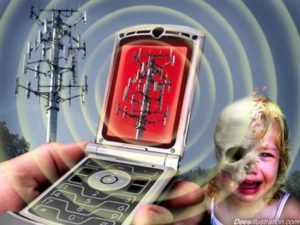
After numerous studies over two decades, there is no convincing evidence that cellphone use increases the risk of cancer. The consensus within the medical profession is that the health effects of regular cell phone use are quite small, if they exist at all. Some studies even show health benefits.
95% of Americans own a cell phone. Children now get their first cell phone around age 10, and most millennials keep their phones on or near them most of the day, even when they sleep.
So it would seem relevant to know whether or not it could be dangerous. But after years of study, the International Agency for Research on Cancer at the World Health Organization only classified radiofrequency electromagnetic fields as ‘possibly’ carcinogenic. Conspiracy theorists got more excited about that than the medical community.
In one study that followed more than 420,000 cellphone users over a 20-year period, researchers found no evidence of a link between cellphones and brain tumors, the obvious cancer of concern. Other studies, especially from Oxford and the Swiss Public Health Institute have also found no correlation.
Cellphones send and receive radio wave signals to and from cellphone towers. These signals are a form of electromagnetic radiation called radiofrequency (RF) energy, like that generated by TV and radio transmitters. When a phone sends signals to a tower, the RF energy goes from the phone’s antenna out in all directions, including into the head and body of the person using the phone.
Cellphones also emit RF energy when using Wi-Fi or Bluetooth, but at lower levels.
Unlike ionizing radiation like gamma rays, neutrons and alpha particles, RF does not have enough energy to split chemical bonds, such as those in compounds like DNA in our cells, which can cause cancer at really high doses.
Some think that, while RF can’t split bonds, it might heat up cells enough to cause damage. But our bodies are really good at heat regulation so you’d have to get an awful lot of dose to do anything, like put your head in a microwave oven, and there is no evidence this happens with cell phones.
(This type of RF heating is quite different from the hot phones that recently spontaneously began burning and were recalled. That was from the batteries overheating)
With years of study and billions of people using cell phones, the fact that we have no real evidence that cellphone use causes cancer means there is little need to worry about it. It’s one of those phantom worries, like low levels of radiation, that is so far below the noise of everyday risks that it’s foolish to spend any effort or money trying to guard against it. Especially since you’ll end up not spending that effort and money addressing real risks – like air pollution, eating too many carbs or driving while texting.
If holding the cell phone to your head is the real vector, then just put it on speaker or facetime, or use the hands-free option in your car. I always put my calls on speaker anyway, not for this reason, but because my old arms get tired.
Or you could just text instead…but not while driving.
Dr. James Conca is an expert on energy, nuclear and dirty bombs, a planetary geologist, and a professional speaker. Follow him on Twitter @jimconca and see his book at Amazon.com
Ashland, MA — (SBWIRE) — 09/28/2015 — Based on its own review of the matter, the Ashland Public School District is reducing wireless radiation exposures to children by instituting district wide “best practices for mobile devices”. Spurred by parent Cecelia Doucette’s concerns about the lack of safety data on Wi-Fi and children, the district investigated the issue and developed a policy to substantially reduce wireless exposures to stud
US Public School Limits Wi-Fi
ents and staff. Doucette not only brought the issue to the district’s attention, but then also worked with state legislatures who introduced two bills concerning electromagnetic radiation this session. The Environmental Health Trust submitted written testimony on MA Senate Bill 1222 after expert scientists presented information on wireless health risks at a briefing at the Massachusetts State House in June 2015.
Since wireless devices are constantly emitting radiation even when the user is not using the Internet, the instruction to “turn it off when not in use ” stops the Wi-Fi antennas from continuously emitting radiation and is one simple way to reduce the radiation dose and exposure time for children and staff.
Instructions for “Best Practices” are posted in every classroom and include:
– Turn off the device when not in use
– Turn Wi-Fi on only when needed
– Always place the mobile device on a solid surface
– Viewing distance should be a minimum of 12 inches from the screen
– Specific product information guides are available through the IT department
– We ask that staff members regularly remind and instruct students in using best practices in regards to mobile devices
Ashland’s Best Practice of “keeping the device on a table” and no closer than a 12 inch viewing distance is critically important. Laptops and tablets have fine print warnings buried in their manuals specifically stating that the laptop should be at least 8 inches away from the user so that the user is not exposed to radiation levels that exceed as-tested FCC levels. If a device is used on a lap, as is common practice, the student could receive radiation levels far exceeding FCC limits. FCC limits are set to prevent the radiation from heating the brain and body but are not set to avoid chronic impacts on the developing nervous system or reproductive organs.
Many are unaware of FCC fine print advisories in the manuals of every wireless device confirming as-tested distances set to avoid heating. Cell phones, laptops and even baby monitors have these specific instructions in their product information guides. By referring to the product information guides, Ashland Public Schools are informing people about the need to keep a distance between the device and our bodies. As a public service, Environmental Health Trust (EHT) has compiled these fine print warnings on their website Showthefineprint.org.
It is important to note that even if users comply with these FCC recommended distances as stated in the device manual, accumulating research shows that biological damage can occur from wireless radiation levels far lower than these FCC levels. FCC limits are only set to protect people from heating harm and do not address non-thermal effects.
This ground breaking policy action by the Massachusetts school district is indicative of the wave of parents raising concerns about Wi-Fi across the country. Ashland, Massachusetts parent Cecelia Doucette wrote an article in Ashland Local Town Pages about these new best practices. Significant news and print media have picked the issue up after Massachusetts parents filed a lawsuit against a private boarding school alleging the school did not accommodate their 12-year-old child’s diagnosed debilitating sensitivity to the school’s WiFi system.
Ashland is the first US public school to create such policy on wireless transmitting devices. However, this US Massachusetts school district now joins dozens of schools and governments that have already implemented even more stringent measures to reduce wireless exposure to children. For example, Israel and France have banned Wi-Fi in kindergarten. The European Union recommends wired Internet rather than wireless in schools.
“Right To Know” efforts by local governments are also moving across the United States. A judge just upheld Berkeley’s new Cell Phone Right To Know Ordinance which requires cell phone sellers to tell customers about these FCC radio frequency radiation distances.
Suffolk County in New York voted to label wireless routers in all public buildings including schools. The US United Federation of Teachers Union now hosts a webpage on how to reduce exposures to protect pregnant women, other staff members and students.
The Environmental Health Trust maintains a regularly updated database of these worldwide precautionary policies on wireless related to children and schools.
About Environmental Health Trust
Environmental Health Trust (EHT) educates individuals, health professionals and communities about controllable environmental health risks and policy changes needed to reduce those risks. Currently EHT is raising health concerns about wireless in schools and recommending safer hardwired internet connection installations. The foundation’s website is the go-to place for clear, science-based information to prevent disease.
Wi-Fi health advocate Cecilia Doucette and parent Keith Marciniak have created a five-part YouTube series that describes the health hazards of pulsed electro-magnetic radiation that floods the environment.
The series covers radiation sources such as cellphones, computers, iPads, cordless phones, cell towers, and Wi-Fi routers that are in most classrooms in the U.S.
Episodes are “Discovering the Dangers”; “Educating the Greater Community”; “Why We Don’t Know”; “Impacts of Excessive Screen Time,” and “Solutions.”
BULLETIN: Apple now recommends using a headset when talking to the iPhone Activate the hands-free option. It tells users to carry the iPhone at least 5 mm [one-fifth of an inch] away from the body. Says Apple: “This ensures that the load is not above the values determined in the tests. Enclosures with metal parts [i..e., cars, buses, trains, planes] may alter the RF (high-frequency) performance of the equipment and adversely affect its compliance with the RF power guidelines in a manner that has not been tested or certified.”
Apple is reacting to measurements that show its two latest products, the iPhone 7 and the iPhone 7 plus, have a significantly higher radiation load than older models. Both products are at the so-called SAR value (specific absorption rate) at up to 1.38.
Below are some of the scientific papers cited in the Doucette/Marciniak series.
Harvard Law School Center for Ethics’ Report, Captured Agency: How the Federal Communications Commission is Dominated by the Industries it Presumably Regulates: http://ethics.harvard.edu/files/cente…
International Appeal: Scientists Call for Protection from Non-ionizing Electromagnetic Field Exposure, signed by 221 world scientists specializing in electromagnetic fields (EMFs) and submitted to the World Health Organization and the United Nations: https://www.emfscientist.org/images/d…
Columbia University’s Dr. Martin Blank gives a three-minute appeal overview here: https://vimeo.com/123468632
IEEE Power Electronics Magazine article indicating even the IEEE, which helped to set the FCC standards in 1996 based on thermal effects, now recognizes biological effects at the non-thermal level: Some Effects of Weak Magnetic Fields on Biological Systems: RF fields can change radical concentrations and cancer growth rates: http://www.wirelesseducation.org/ieee…
Dr. Martin Pall’s 16-minute lecture on what electromagnetic radiation is doing to our bodies and why it is causing illness:https://www.youtube.com/watch?v=3kQQy…
Nobel Peace Prize Co-Laureate Scientist Dr. Devra Davis and former long-time Microsoft Canada President Frank Clegg presenting the need for an EMF right-to-know initiative to the MA legislature: https://vimeo.com/134411701
Environmental Health Trust article, First US Public School District Limits Wi-Fi Radiation Exposure to Students and Staff: http://ehtrust.org/first-us-public-sc…
WACA-TV public service video for the Acoustimeter on loan at Ashland Public Library showing how to measure common home exposures and solutions to create a safer environment: https://vimeo.com/159873631
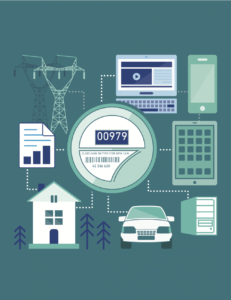 Investigates invisible risk lurking in schools WHO advisor warns of cancer time bomb fear Effects make life unbearable, claim sufferers EXCLUSIVE By Grace Macaskill
 Aug. 1, 2011 — Researchers seeking to explain the rising number of


 extremely high frequency microwave radiation, with major implications for health, privacy, property rights, and local control.
 After numerous studies over two decades, there is