5G antennas are popping up all across the United States, and a significant number of people are growing increasingly concerned over the long-term health effects of the high-speed communications technology. Unfortunately, it appears as though their trepidations are falling on deaf ears.
5G technology is alluring in that it offers download speeds up to 30 times faster than 4G. It is touted as the technology necessary for self-driving vehicles. Gaia.com elaborates,
The difference between 4G and 5G in terms of gigahertz, the unit of alternating current (AC) or electromagnetic (EM) waves that affect the transmission speeds of devices, is significant. 5G technology promises radio millimeter bands in the 30 to 300 GHz range, while 4G tops out at around 6GHz. When applied to video latency, this translates to speeds up to 60 to 120 times faster.
Lawmakers are anxious to see the new technology rolled out in their cities. CBS News reports Sacramento was one of the first cities in the nation to launch 5G under the leadership of Mayor Darrell Steinberg in 2017, but residents have voiced concerns over the public safety of the new technology.
Sacramento parents Aaron and Hannah McMahon, who have two young daughters, told CBS they had a 5G cell antenna on a pole just outside of their home. According to Aaron, experts have told him that his family is virtually “living in a microwave” with the tower so close to their residence.
“It’s scary, it’s a hard situation to be in,” Hannah McMahon said. “They can’t tell me that something that’s fairly new, and relatively untested, is not gonna be harmful in 10-15 years.”
And the McMahons are not alone. Homeowners in cities throughout the country are leading petitions to stop 5G construction in their neighborhoods, citing public health fears.
In an effort to assuage concerns, Sacramento commissioned an independent study on the safety of the 5G towers led by University of California Davis Professor Jerrold Bushberg.
Bushberg claims the towers emit “very low levels of exposure” and therefore do not pose a health threat. He adds the FCC sets guidelines for exposure to cell signals, and the exposure from the 5G antennas is well within the safe level.
But skeptical Americans do not necessarily find relief in that assessment. After all, the Food and Drug Administration frequently approves drugs later proven to cause serious long-term health consequences.
It’s worth noting the former chair of the FCC, Tom Wheeler, who was behind the big push for 5G technology, was also the former head of the Cellular Telecommunications Industry Association (CTIA), the vast telecoms lobby group. Current FCC Chairman Ajit Pai is also a proponent of 5G technology, and has even dismissed claims that the technology could interfere with weather observations, despite the studies in support of those observations. Pai has close ties to the telecommunications industry as a former Verizon lawyer. Is there a possible conflict of interest there?
While Dr. Bushberg could be completely correct in his assessment of 5G, the science is anything but settled. More than 200 scientists in more than 40 countries have warned about 5G’s health risks and have asked the European Union to follow “Resolution 1815 of the Council of Europe” — which asks the Council of Europe to take all measures to reduce exposure to electromagnetic fields and create an independent task force to reassess the health risks of the exposure. Those scientists declared in the “5G Appeal” to the EU:
We, the undersigned scientists, recommend a moratorium on the roll-out of the fifth generation, 5G, until potential hazards for human health and the environment have been fully investigated by scientists independent from industry. 5G will substantially increase exposure to radio frequency electromagnetic fields (RF-EMF) … and has been proven to be harmful for humans and the environment.
They explain that because the technology is poorly transmitted through solid materials, it will require new antennas nearly every 10 to 12 houses in urban areas, significantly increasing EMF exposure. According to opponents of 5G, some potential effects of this exposure can include cancer, genetic damages, reproductive issues, cognitive and neurological disorders, to name just a few.
The National Toxicology Program (NTP) conducted a $25 million U.S. study and found a significant increase in the incidence of brain and heart cancer in animals exposed to EMF below the International Commission on Non-Ionizing Radiation Protection (ICNIRP) guidelines followed by most nations and significantly lower than the levels created by 5G technology.
Dr. Ron Powell is a retired U.S. Government physicist who has worked with this technology in the military, and has been an outspoken critic of 5G technology. He has claimed it “would irradiate everyone, including the most vulnerable to harm from radiofrequency radiation: pregnant women, unborn children, young children … the elderly, the disabled, and the chronically ill…. It would set a goal of irradiating all environments.”
While 5G has certainly not been “proven” to be harmful to the general population, since it is just now being implemented, it appears that concerns over 5G’s health risks are not unfounded. But what has been Sacramento’s response to concerned citizens such as the McMahons? It will make sure the FCC rules are followed and the cells are aesthetically pleasing, CBS Sacramento reports.
Emf Sensitivity Test, Emf Shield Test, Emf Test, Emf Test Meter, Emf Test Power Line, Emf Test Results, Emf Test Standard, Emf Testing Certification, Shungite Emf Test, Test Emf Your Home
WASHINGTON, Sept. 24, 2018 /PRNewswire/ — Accelerating Wireless Broadband Deployment by Removing Barriers To Infrastructure Investment Order will be voted on Wednesday by FCC denying citizens and local government the right to stop 5G cell tower transmitters in front of their homes.
Despite widespread opposition to the roll out of 5G cell tower transmitters by residences, communities and local governments (National League of Cities Oppose, National Resource Defense Council opposes), FCC vote will override local measures to stop 5G cell transmitters in their communities.
More than 230 medical doctors and scientists from 40 countries expert in wireless radiation health effects have signed a formal appeal demanding a moratorium on the roll out of 5G due to the fact that wireless radiation “RF-EMF has been proven to be harmful for humans and the environment” see www.5Gappeal.eu. Yet the FCC will be voting for an order that circumvents the consideration of environmental and health effects on a local level.
5G technology will emit millimeter wave radiation. The Army has reviewed 350 millimeter wave studies and cited nonthermal biological effects not protected by our current thermally based FCC guidelines-see www.5Ginformation.net for a copy of this report as well as other studies showing neurological and cancerous effects from current cell towers-see evidence of harm section. The military currently uses millimeter wave technology in its Active Denial System, a crowd control weapon.
FCC and FDA do not premarket Safety Test any wireless device or cell tower transmitter before testing them on the public. FCC and FDA do not post-market survey wireless devices or cell tower transmitters for cancerous or neurological health effects. They rely on an outdated human exposure standard that only takes into account thermal heating or burning. Currently individuals are already Microwave Sick from wireless radiation exposure-see Webster’s Dictionary definition Microwave Sickness.
CA Brain Tumor Association joins health and environmental groups nationwide in asking the FCC to delay or end its insistence on passing the Accelerating Wireless Broadband Deployment by Removing Barriers To Infrastructure Investment Order WT Docket #NO. 17-79; WC Docket NO. 17-84 which will be harmful to the health of communities and disrespectfully dismisses the input of local communities and governments nationwide.
Please Contact Kevin Mottus Outreach Director CA Brain Tumor Association for more information at Kevin.calibta@gmail.com.
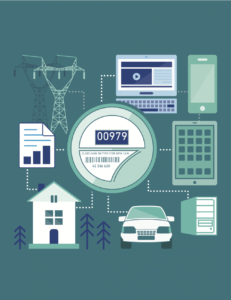
Public Utility Commission is working with utility companies to force “smart meters” on consumers.
I am writing about the dangers of “smart meters” and the way the state Public Utility Commission is implementing Act 129, working with utility companies not to protect consumers but to coerce them into having these dangerous meters installed on their homes and properties, against their will and without their consent, with the threat of having their electricity shut off if they fail to comply.
The studies showing the harmful effects of the radiation from electromagnetic fields, or EMFs, continue to pile up. These studies are being ignored, and residents are being told these meters are safe and produce less radiation than cellphones or Wi-Fi routers. This is untrue. These meters are an entirely different ballgame, and even though Wi-Fi and cellphones are also harmful, individuals who didn’t notice the effects of these are unable to function in their own homes after a smart meter is installed. There is a very informative TED Talk done by Jeromy Johnson, who describes his health issues that started after a smart meter was installed on his home. Such stories are becoming more common as the smart meter rollout continues across the state.
These EMFs are adversely affecting everyone, even if they are unaware of it. Some members of the population are so sensitive that they are unable to stay in their homes or workplaces because they are so strongly affected.
Residents should not have to fight to stop the utilities from harming them.
Investigates invisible risk lurking in schools WHO advisor warns of cancer time bomb fear Effects make life unbearable, claim sufferers EXCLUSIVE By Grace Macaskill
A leading cancer expert has called for a ban on school WiFi networks over fears they could put children’s health at risk.
He warned: “Radiation from mobile phones and other wireless devices can cause changes in DNA and induce cancer in experimental animals.
“Children’s skulls are thinner and absorb much more of this radiation. We ignore this at our future peril.”
Campaigners claim an increasing number of people suffer from “electromagnetic sensitivity” – leading to symptoms from a lack of concentration to headaches and nosebleeds. In one disturbing case, a 15-year-old is said to have taken her own life after being overwhelmed by tiredness, dizzy spells and even itchy skin due to WiFi networks at her school.
We also found children removed from class by their parents after they began to suffer nausea and concentration issues – and even a teacher who claims he was affected himself.
EXPOSURE
Yet Public Health England insists WiFi is safe as it uses similar frequencies to radio and TV and gives less exposure than mobiles.
And that means NHS doctors currently have no diagnosis for the condition – leaving those fearing they suffer from it with nowhere to turn.
Mum Debra Fry told how her daughter Jenny killed herself after developing the WiFi “allergy”.
The 15-year-old hanged herself from a tree following two years of crippling tiredness, headaches and even bladder problems.
Debra, 57, said: “I believe she just couldn’t take any more. She had overwhelming fatigue, headaches and ear pressure, difficulty finding words, itchy skin, dizziness and stiff joints.
“She was getting into trouble at school because she couldn’t concentrate and needed to urinate more than usual, so was always leaving class.
“She’d always been a very good student and a very healthy child.
“I made sure she got the right nutrients, the right influences, the right education. I had no idea we were exposing her to something so dangerous.”
While many of Jenny’s symptoms could be put down to teenage hormones, Debra and partner Charles Newman are in no doubt they were caused by the wireless networking technology. They say Jenny’s difficulties began when they and her school installed WiFi at around the same time in late 2012.
But she improved when they took out their home WiFi router months later. Debra, of Chadlington, Oxon, said: “All her symptoms eased or went away when she came home, particularly at weekends and holidays. We wanted to take her to the GP but thought our fears would be dismissed.”
She told how Jenny then failed to show up at school one day in June 2015. She said: “She’d texted a friend, hinting at what she was going to do. But they’d left their phone at home.
“When they realised something was wrong another friend came to tell me and we went out looking for her.”
Close to tears, Debra told how she saw her daughter in the distance, beside a tree. She said: “I thought she was standing on the bough of the hill.
“I was calling out her name, asking if she was okay and reassuring her.
“It was only as I got closer I realised she wasn’t standing at all and there was a noose around her neck.”
Surveys have shown up to five per cent of people believe they are affected by sensitivity to radio waves. Experts are divided over whether the technology can actually cause harm.
And even insurance firms play safe, with some refusing outright to cover schools against claims for exposure.
Lloyds of London syndicate CFC Underwriting excludes school liability for injuries “resulting from or contributed to by electromagnetic fields, electromagnetic radiation, electromagnetism, radio waves or noise.” Another firm, Zurich, will offer cover. But Tilden Watson, head of education products, said: “As with any insurance, we would consider the school’s specific involvement in use and supply of the technology.”
The International Agency for Research on Cancer – a branch of the World Health Organization – classes WiFi as a Group 2B cancer risk, meaning there is not yet enough evidence to dismiss a possible link.
WiFi is included because it uses similar technology to mobile phones.
Public Health England says a year spent near to a WiFi hotspot would give the same dose of radio waves as a 20-minute mobile call.
Canadian Dr Miller believes WHO should increase the risk rating.
He said: “We know that when humans are exposed to cancer-causing agents, it’s usually quite a delay before you see the full effect. We’re concerned when those children become adults their risk of cancer will be much greater.
“We could be storing up higher cancer rates in the future. Since radio frequency radiation was graded 2B there have been more studies showing this increased risk.
“In my view it should be on the same level as tobacco and asbestos. It should not be allowed in school.”
Schools in France, Belgium and parts of America already ban or limit WiFi use. And campaigners are urging the UK to follow suit until more research is carried out.
Mum-of-three Alisa Keane has taken her three sons out of school because she believes the WiFi was making them ill.
Alisa, of Downpatrick, Co Down, said James, nine, Conn, seven, and six-year-old Dara suffered headaches, nausea and concentration issues.
She is now home schooling them after seeing how the “fog” lifted away from the classroom.
And in Doncaster, dad Paul Lewis removed daughter Jessica from her junior school into a private academy after she developed headaches when WiFi was introduced in the classroom.
same asbestos. It schools Accountant Paul claims ADVSOR Jessica, now 15, no longer suffers the mysterious symptoms. He said: “The frustrating thing is there is no need for school WiFi.
“They should be using cables until it can be proved there is no risk from electromagnetic fields.”
Sarah Dacre, a trustee of charity Electrosensitivity UK, says they help “hundreds” of people with symptoms including tinnitus, skin rashes, muscle pains and memory loss.
She said: “There are clinics overseas which regularly diagnose ES with a range of tests. “But there are no such places in the UK and most GPs have no training in handling it.
“New ES cases often tell us they’re unable to use smartphones or WiFi routers, and that installation of smart meters has made their lives impossible.” Diana Hanson, of the Safe School Information Technology Alliance, says parents convinced WiFi is making their children sick are often “extremely distressed”.
She said: “People say the risk is minimal by comparing it to things on the Group 2B list such as coffee and exhaust fumes.
“But we don’t give our children 10 coffees a day or sit them in a room full of running cars.”
Marc Alessi wrote a letter in the March 16 issue of the Great Neck News, gushing over the upcoming implementation of a new, powerful version of a wireless network, known as 5G. Unfortunately, his presentation failed to mention the potential negative health consequences of the system.
On Sept. 13, 2017, more than 180 scientists and doctors from 35 countries signed a petition recommending a moratorium on the roll-out of 5G systems for telecommunication until potential hazards for human health and the environment have been fully investigated by scientists independent from industry.
5G will substantially increase exposure to radio-frequency electromagnetic fields on top of the 2G, 3G, and 4G Wi-Fi networks for telecommunications already in place.
Given that RF-EMF has been proven to be harmful for humans and the environment, scientists are fearful that exposure to 5G systems will substantially increase the health hazard, over and above what we are already experiencing.
A large number of peer-reviewed scientific reports have demonstrated harm to human health from EMFs, including a recent study by the National Toxicology Program. These results support human epidemiological studies on RF radiation and brain tumor risk.
5G networks are generally considered to operate within the band of spectrum between 6 GHz and 100 GHz, also known as the millimeter wave band.
These are much higher frequencies than the 2G, 3G, or 4G networks currently in place, and have never before been used in conjunction with everyday consumer products. Because of the tremendous capacity of these 5G networks, companies will be able to link more and more devices to one another wirelessly.
Such connected devices make up what is called “The Internet of Things.”
Soon we’ll be able to access many of our appliances at home via our cell phones or computers, as an example. As great as this may sound, it means that we will be completely awash in the waves that connect these devices, and by the electromagnetic fields generated by them.
Another related use of the 5G networks is in “Smart City” systems. These are wireless networks that connect many objects in a community, such as the streetlights, cameras, audio surveillance equipment, billboards, garbage pails, etc.
As part of the LED streetlight installation in the Village of Great Neck, Mayor Pedram Bral authorized the installation of a Smart City system.
There is now a wireless receiver on top of every one of the 800 light poles in the Village. This will make it possible for someone at a remote location to dim the lights as needed. Ostensibly, this is the major purpose of this very expensive network.
My concern is twofold: 1. even with the system in place, the result is that we now are bathed in RF-EMFs to a greater degree than we had been previously; 2. it is likely that in the future, the system will be upgraded to a 5G system, bringing with it even more potential risks to health and to the environment.
The issue of RF-EMFs goes way beyond Great Neck Village. State legislation is now on track to ease the installation of 5G systems by the major telecommunications giants in this country, leaving localities no control over the rollout.
Does Wireless Network Affect Health, Health Hazards Of Wireless Networks, Use Of Wireless Networks In Healthcare, Wireless Internet Causing Health Problems, Wireless Internet Connection Health Risks, Wireless Internet Health Concerns, Wireless Internet Health Effects, Wireless Lan Health Risk, Wireless Network And Health, Wireless Network Effects On Health, Wireless Network Extender Health Risk, Wireless Network Health Check, Wireless Network Health Concerns, Wireless Network Health Issues, Wireless Network In Healthcare, Wireless Network Safety Health, Wireless Networks And Health Risks, Wireless Networks Health, Wireless Networks In Healthcare, Wireless Router Health Concerns, Wireless Router Health Effects, Wireless Router Health Risks, Wireless Router Health Safety, Wireless Sensor Network In Health Monitoring
We take wireless technology for granted, even though it is basically “magic.” And that perceived magic has led to myths and fallacies that need to be dispelled.
Wireless, or radio if you prefer, is a strange and wonderful phenomenon. Voice, music, video, and data miraculously move almost instantaneously from one place to another invisibly through the air. How could that be? Our entire environment is an invisible fog of thousands of electromagnetic waves. The whole phenomenon has been amazing to me since I was a kid. Even though I understand it I am still in awe of the technology.
That said, wireless technology is a complex subject. It has taken me most of my life time to learn it. And I still don’t know it all. But to non-wireless engineers, radio must seem an enigma. There’s much to get accustomed to and understand. What follows are 11 myths about wireless you may not know but should.
1. Wireless was invented by Marconi.
No, it was not. I would give my vote to Heinrich Hertz, who should get more recognition for his earliest demonstration of the concept. But we do use his name as the unit of frequency measurement. As for Marconi, he was a major contributor to the technology and is probably best known for putting the theory into practice. Marconi engineered the early radio equipment and demonstrated its capabilities. The real inventor of radio was Tesla, who did little to advance the science beyond a few clever demonstrations. Tesla was posthumously awarded the U.S. patent in 1943.
2. The Federal Communications Commission is the primary communications regulator.
The FCC implements the rules and regulations regarding most commercial and personal wireless products and applications. They manage the spectrum and define all kinds of guidelines like power, antennas, bandwidth, modulation, and interference. But they aren’t the only U.S. regulatory agency. The other agency that most of you have not encountered is the National Telecommunication and Information Administration (NTIA). The NTIA is the manager and regulator of all government and military wireless spectrum and equipment. It’s a division of the Department of Commerce. They work closely with the FCC to rule the airwaves.
3. Radio waves work like magnetic induction.
Not so. A radio wave is really a combination of an electric field at a right angle to a magnetic field. The two travel together in a direction perpendicular to both fields. As they propagate from the transmitting antenna to the receiving antenna, they stay together. Essentially the fields break away from the antenna, or radiate, and then actually support and rejuvenate one another along the way. The math describing that process was spelled out as far back as 1873 by James Clerk Maxwell. This signal that’s radiated is called the far field. It’s the real radio wave.
The field close to the antenna, typically within one wavelength, is called the near field. Transmission is more by magnetic field than by combined magnetic and electric fields. The near field signal is non-radiative. The near field is really inductive coupling that occurs between the primary and secondary windings of an air core transformer. The near field isn’t the real radio wave.
4. The propagation of a radio wave is basically the same for all wireless applications.
No way. Radio signals act differently depending on their frequency. Low-frequency signals in the 50- to 3000-kHz range travel by ground or surface wave. The vertically polarized signal hugs the ground and is mostly dissipated after a few hundred miles.
AM broadcast stations represent one example. Signals in the 3- to 30-MHz range travel by sky wave. The signals essentially are refracted by the ionosphere back to earth. Depending on the angle of radiation, time of day, and the specific ionosphere layer encountered, the signal could travel by skipping long distances nearly around the world. Frequencies over 30 MHz and up into the mmWave range travel by direct line of sight from antenna to antenna. These signals are usually reflected or absorbed, so range is generally limited.
5. We have totally run out of frequency spectrum.
Not completely, but we’re working toward that it seems. Most of the so-called “good” spectrum (~500 MHz to 6 GHz) is pretty much consumed, but plenty of spectrum exists at the higher frequencies beyond about 30 GHz.
Some say there’s a spectrum crisis as more wireless products and services are developed. One contributor to the shortage is the growing Internet of Things (IoT) movement. With billions of new devices coming on line, spectrum usage is something to worry about. But it’s the cellular industry that lusts after spectrum the most. The FCC hosts auctions to sell off available chunks of spectrum when they become available. Billions of dollars are collected.
6. Radio broadcasting is dead.
You may have gotten the impression that AM, FM, and TV broadcasting were on their way out thanks to all the internet streaming of music and video. But it’s not. While the number of AM stations has declined a bit, FM is growing. Satellite radio is also healthy. Furthermore, almost 20% of the U.S. population gets its TV by over-the-air (OTA) broadcasts. This includes satellite TV broadcasting. On top of that, short wave broadcasting is still around; not so much in the U.S., but it’s still big in Europe, the Middle East, Africa, and other more remote parts of the world.
7. The most widely used wireless standard is Wi-Fi.
Wi-Fi is certainly a heavily used wireless standard. But in terms of sheer volume of radios in use, Bluetooth is probably the more widespread. It’s in all cell phones, most cars and trucks, headphones, speakers, retail beacons, and a mixed bag of other applications. It takes two chips to implement any Bluetooth applications. That’s why billions of Bluetooth radio chips are sold annually.
8. Cell phones give you a brain tumor.
That myth has been around ever since the first cell phones emerged in the late 1980s. It’s been studied multiple times, and the outcome is that cell phones don’t cause brain tumors. Perhaps if you held the phone to your head eight or so hours a day, you may get brain damage. But today, instead the process of holding the phone to your ear and head for a voice call has been replaced by holding the phone in your hands in front of you while you text, read email, or watch a YouTube video. No cancer.
9. Wireless data transfer is always faster than wired data transfer.
Not true. Wired data communications say by Ethernet or fiber optics, is very solid and usually faster than wireless. Ethernet can do 100 Gb/s and optical is now doing up to 400 Gb/s using PAM4. With a solid link, data can be faster because it doesn’t have to deal with all of the free space link and path problems of wireless.
Wireless free space path loss is very high; there’s always noise and interference that limits the data rate. But wireless has come a long way over the years with error correction, multichannel modulation like OFDM, MIMO, and phased arrays. As a result, wireless begins to approach wired speeds. Under ideal conditions, wireless data can hit levels of 10 to 100 Gb/s.
10. Rain and snow make satellite TV, phones, and data services unreliable.
You have probably heard of this one but it not true. Actually, at some frequencies in older systems, rain does attenuate the signal. But today, most components, equipment, and systems compensate for it with good link margins. We would not be using so many satellites if the coverage were iffy. What would we do without things like GPS, worldwide sat phones, space telescopes, and military surveillance?
11. Millimeter waves will never be practical.
Maybe that was true in the past, but today mmWaves are widely used thanks to the availability of semiconductor devices to generate and process these signals. Millimeter waves cover the 30- to 300-GHz range. All sorts of systems use them, especially radar and satellite. The 802.11ad WiGig WLAN products at 60 GHz are now available. Automotive radars use 77 GHz. And many of the forthcoming 5G cellular and fixed wireless access systems use mmWaves. Researchers are working on terahertz wave technology now.
There should be a wireless appreciation day to celebrate its existence. How about every day?
A study of real-world exposure to non-ionizing radiation from magnetic fields in pregnant women found a significantly higher rate of miscarriage, providing new evidence regarding their potential health risks. The Kaiser Permanente study was published today in the journal Scientific Reports (Nature Publishing Group).
Non-ionizing radiation from magnetic fields is produced when electric devices are in use and electricity is flowing. It can be generated by a number of environmental sources, including electric appliances, power lines and transformers, wireless devices and wireless networks. Humans are exposed to magnetic fields via close proximity to these sources while they are in use.
While the health hazards from ionizing radiation are well-established and include radiation sickness, cancer and genetic damage, the evidence of health risks to humans from non-ionizing radiation remains limited, said De-Kun Li, MD, PhD, principal investigator of the study and a reproductive and perinatal epidemiologist at the Kaiser Permanente Division of Research in Oakland, California.
“Few studies have been able to accurately measure exposure to magnetic field non-ionizing radiation,” Dr. Li said. “In addition, due to the current lack of research on this subject, we don’t know the biological threshold beyond which problems may develop, and we also don’t yet understand the possible mechanisms for increased risks.”
In a new study funded by the National Institute of Environmental Health Sciences, researchers asked women over age 18 with confirmed pregnancies to wear a small (a bit larger than a deck of cards) magnetic-field monitoring device for 24 hours. Participants also kept a diary of their activities on that day, and were interviewed in person to better control for possible confounding factors, as well as how typical their activities were on the monitoring day. Researchers controlled for multiple variables known to influence the risk of miscarriage, including nausea/vomiting, past history of miscarriage, alcohol use, caffeine intake, and maternal fever and infections.
Objective magnetic field measurements and pregnancy outcomes were obtained for 913 pregnant women, all members of Kaiser Permanente Northern California. Miscarriage occurred in 10.4 percent of the women with the lowest measured exposure level (1st quartile) of magnetic field non-ionizing radiation on a typical day, and in 24.2 percent of the women with the higher measured exposure level (2nd, 3rd and 4th quartiles), a nearly three times higher relative risk. The rate of miscarriage reported in the general population is between 10 and 15 percent, Dr. Li said.
“This study provides evidence from a human population that magnetic field non-ionizing radiation could have adverse biological impacts on human health,” he said.
Strengths of this study, Dr. Li noted, included that researchers used an objective measuring device and studied a short-term outcome (miscarriage) rather than one that will occur years or decades later, such as cancer or autoimmune diseases. The study’s main limitation is that it was not feasible for researchers to ask participants to carry the measuring device throughout pregnancy.
Dr. Li noted that the potential health risk of magnetic-field non-ionizing radiation needs more research. “We hope that the finding from this study will stimulate much-needed additional studies into the potential environmental hazards to human health, including the health of pregnant women.”
Earth’s Magnetic Field And Health, Electromagnetic Fields And Health, Electromagnetic Fields Health Risk, Health And Safety Magnetic Fields, Health Canada Magnetic Fields, Health Concerns Magnetic Fields, Health Hazards Of Magnetic Fields, Health Issues Magnetic Fields, Magnetic Field Effects On Health, Magnetic Field Exposure Health, Magnetic Field Health And Safety, Magnetic Field Health Concerns, Magnetic Field Health Issues, Magnetic Field Impact On Health, Magnetic Field On Health, Magnetic Field Strength And Health, Magnetic Field Strength Health, Magnetic Fields And Health Effects, Magnetic Fields And Health Issues, Magnetic Fields And Health Risks, Magnetic Fields Bad For Health, Magnetic Fields Health Benefits, Magnetic Fields Health Effects, Magnetic Fields Health Problems, Magnetic Fields Health Risk, Static Magnetic Field Health Effects, Static Magnetic Fields Health, Strong Magnetic Fields Health
Inside Science) — Electronics small enough to fit inside cells may one day help scientists track individual cells and monitor their behavior in real time, a new study finds. These new devices could help analyze diseases from their origins in single cells, researchers said.
The new electronics are microscopic radio-frequency identification tags, which are essentially bar codes that can be read from a distance.
An RFID tag usually consists of an antenna connected to a microchip. A nearby reader known as a transceiver can emit electromagnetic signals at the tags, and the tags can respond with what data it has stored, such as its identity, when and where it was made, how to best store and handle it, and so on. Many RFID tags do not have batteries — instead, they rely on the energy in the signals from the transceivers.
These tags are already being used in many applications today, including key cards, toll passes, library books and many other items, but the typical RFID tags are millimeters to centimeters in size. The new microscopic tags in comparison are only 22 microns wide each, or roughly one-fifth the average diameter of a human hair, making them the smallest known RFID tags, the researchers said. They detailed their findings online July 26 in the journal Physical Review Applied.
The microscopic tags are each made of two metal layers — one made of a 5-nanometer-thick titanium and 200-nanometer-thick gold film, the other of a 1,000-nanometer-wide aluminum sheet — sandwiching a 16-nanometer-thick electrically insulating layer of hafnium dioxide.
Each tag is octagonal in shape. This is the closest the scientists can get to a circular shape, which is ideal for interacting with the magnetic fields from transceivers, said study lead author Jasmine Xiaolin Hu at Stanford University in California. Finally, the devices are fully encapsulated in silicon dioxide, the same material found in sand, to make them safe for biological applications.
Conventional RFID readers used to communicate with the tags have just one antenna. Instead, the researchers used two antennas, each roughly twice the tag’s diameter. Doing so boosted the magnitude of the tag signals by more than tenfold, which can make the difference between detecting a moving tagged cell in a complex biological setting or losing track of the cell just a few microns away.
Although these new microscopic tags are still larger than many cells, they do “fit into a variety of cells of great interest,” Hu said. The researchers found that this includes mouse melanoma cells, human melanoma cells, human breast cancer cells, human colorectal cancer cells and healthy human connective tissue cells, she said.
The researchers soon plan to monitor tagged living cells flowing within microscopic silicone rubber channels from a range of a few microns. Future research can explore developing smaller tags and finding ways to keep track of them, Hu added.
“This is step one towards sending signals within the cell to the outside world without probing through or perturbing the cell membrane and risking damaging and destroying the cell in due process,” said Stephen Wong, a bioengineer and systems biologist at the Houston Methodist Research Institute, who did not take part in this research. “It opens up a whole new world of live-cell studies.”
Sensors and other devices could get coupled with these microscopic tags “to measure and perform a variety of things,” Hu said. “We will have a measure of control within a cell that has not been achieved before.”
The ability to embed electronics into cells could help researchers understand and manipulate cell activities to an unprecedented degree. “Most disease processes start at a single- to few-cell level, but currently we have no technology to monitor a few cells inside the living body of a person,” Hu said. “Tracking and monitoring single cells may enable the early detection of diseases and allow for the start of treatments as soon as possible so that treatments can be more successful.”
For example, a pH sensor within a cell could help measure its acidity, “which indicates the healthiness of a cell,” Wong said. “We can also measure glucose to measure a cell’s metabolism, as well as many other molecules in cells.”
Future research should also focus on extending the range at which the researchers can scan the tags, Wong said. “Currently, the wireless receiver has to be very close to the cells, which is not ideal,” Wong said. “Still, what they’ve shown is a good step forward.”
 5G antennas are
  WASHINGTON
 Public Utility Commission is working with utility companies to force “smart meters” on consumers.
 Investigates invisible risk lurking in schools WHO advisor warns of cancer time bomb fear Effects make life unbearable, claim sufferers EXCLUSIVE By Grace Macaskill
 Marc Alessi wrote a letter in the March 16 issue of the Great Neck News, gushing over the upcoming implementation of a new, powerful version of a wireless network, known as 5G. Unfortunately, his presentation failed to mention the potential negative health consequences of the system.
  Wireless, or radio if you prefer, is a strange and wonderful phenomenon. Voice, music, video, and data miraculously move almost instantaneously from one place to another invisibly through the air. How could that be? Our entire environment is an invisible fog of thousands of electromagnetic waves. The whole phenomenon has been amazing to me since I was a kid. Even though I understand it I am still in awe of the technology.
 A study of real-world exposure to non-ionizing radiation from magnetic fields in pregnant women found a significantly higher rate of miscarriage, providing new evidence regarding their potential health risks. The Kaiser Permanente study was published today in the journal Scientific Reports (Nature Publishing Group).
 Inside Science) — Electronics small enough to fit inside cells may one day help scientists track individual cells and monitor their behavior in real time, a new study finds. These new devices could help analyze diseases from their origins in single cells, researchers said.