No longer can it be ignored that manmade electromagnetic radiation poses innumerable risks to human health
The Ubiquity of Electrosmog
 Concerns about electromagnetic fields (EMF) are branded pseudoscientific conspiracy theories and relegated to the realm of tin-hat wearing quackery. However, a recent publication in the peer-reviewed journal Immunologic Research entitled “Electrosmog and Autoimmune Disease,” sheds new light on the validity of concerns about this so-called electrosmog with which we are constantly inundated.
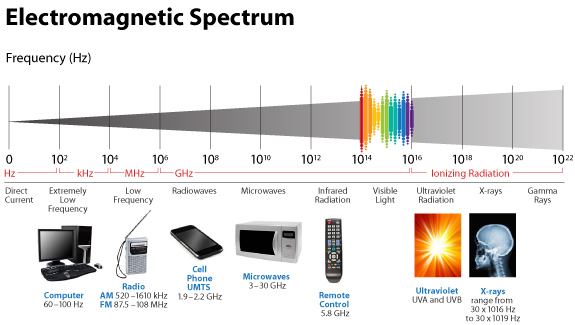
Although we encounter natural microwave electromagnetic radiation in the form of cosmic radiation from outer space, the aurora borealis, and thunderstorms, the vast majority of electrosmog that we encounter is largely manmade (1). These atmospheric phenomena, however, emit electromagnetic radiation at lower radio frequencies and are negligibly weak in comparison to manmade sources, which have increased exponentially due to the emergence of television, cellular phone technologies, and WiFI, all of which utilize microwave frequency bands (1).
According to researchers Marshall and Heil (2017), for instance, “The recent release of WiGig and anti-collision vehicle radars in the 60 GHz region embody a 1000-fold increase in frequency, and photon energy, over the exposures mankind experienced up until the 1950s” (1).
How Electrosmog Interfaces with the Bioelectromagnetic Body
It is intuitive that electrosmog would interact with human biology, since human physiology operates in part via electromagnetic fields. Apart from physical information superhighways such as the blood, nervous, and lymphatic systems, the body uses electromagnetic forms of energy transmission and communication which are several orders of magnitude faster than chemical diffusion (2).
Called biophotonic emission (BPE), these quanta of electromagnetic energy have a visibility one thousand times lower than the sensitivity of our naked eye and are quintessential to cellular metabolism and to the powering of our energy-intensive nervous and immune systems (3). Harbored within our genetic material, biophotonsserve as a mode of instantaneous communication from one body part to another and to the extraneous world (4) and their emission is influenced by our global state of health (5). Research even suggests that mental intention and the fabric of our consciousnessis mediated by these quantum of light, which operate as highly coherent frequencies and generate an ordered flux of photons (4).
Thus, both the stuff of consciousness and the functioning of our cellular energetics is premised upon electromagnetism, which may be susceptible to distortion by electrosmog. Curtis and Hurtak describe the electromagnetic body as both “an entire body distinct from the chemical body that interpenetrates it” and “a light circulatory system operating on an energetic level in a markedly different manner from that of its molecular counterparts” (2). That there is “an incredible amount of activity at levels of magnification or scale that span more than two-thirds of the 73 known octaves of the electromagnetic spectrum” (6) in the human body is emblematic of our vulnerability to electromagnetic disturbances.
Potential Immune Disturbances due to Electrosmog Exposure
Although current public health laws are predicated on effects of short-term exposure, research suggests that dosage and repetitive exposures likely influence health risk of electrosmog (7). Two thirds of studies examined report ecological effects of electromagnetic radiation, and researchers state that, “current evidence indicates that chronic exposure to electromagnetic radiation, at levels that are found in the environment, may particularly affect the immune, nervous, cardiovascular and reproductive systems” (7).
Although the conventional mantra is that no harm is incurred from low-energy radio waves, low-level exposures to ionizing radiation are known to manifest profound effects upon human physiology (1). Ionizing radiation exposure, which occurs secondary to nuclear energy accidents, for example, produces immunosuppression, so much so that some scientists have even suggested radon exposure as a therapeutic treatment for rheumatoid arthritis due to its inhibition of inflammatory immune messengers such as the adipokine visfatin (8).
There is, however, often a substantial lag time between exposure and the materialization of symptomatology (1). The detriment to immune defense “often does not become apparent until the body catastrophically fails to overcome an acute challenge” (1). In addition, new science is overturning the previous assumption that immunosuppressive effects are exclusive to ionizing radiation exposure.
A research group headed by Lushinov, for example, found that repeated exposures to low-level non-ionizing electromagnetic radiation impaired the immune response in mice, negatively influencing immunogenesis, or the ability of the immune response to respond to an immune-provocating antigenic substance (9). The exposure to low-intensity electromagnetic radiation negatively influenced thymic and splenic cellularity, causing a statistically significant decrease in the immune cells generated by these lymphoid organs (9). The immunocompetence of the Aegean wall lizard was also significantly reduced upon daily exposure to radiofrequency resembling the amount of electrosmog emitted from cordless phones (10).
Moreover, Gapeev and colleagues (2006) elucidated that exposure to low-intensity non-ionizing electromagnetic waves exerted equivalent immunosuppressive effects to a single dose of the nonsteroidal anti-inflammatory drug (NSAID) diclofenac (11). In another experiment, exposure to low-intensity electromagnetic radiation reduce the footpad edema and local hyperthermia, also known as swelling and heat, that accompanied injection of zymosan, an agent that induces acute inflammation (12). This constitutes evidence that electrosmog exposure may impair the normal immune response to potential threats.
Human Proteins are Responsive to Electromagnetic Waves
Biomolecules, which are constantly undergoing molecular collisions and interacting on the scale of picoseconds, are subject to forces exerted by incident electromagnetic fields (1). According to researchers Marshall and Heil, “It seems likely that signals a million times lower than those currently being used in research may be sufficient to elicit a tangible change in human biology” (1).
Continue reading “Groundbreaking Study Shows Shielding EMF Improves Autoimmune Disease” →
Read More
 Marc Alessi wrote a letter in the March 16 issue of the Great Neck News, gushing over the upcoming implementation of a new, powerful version of a wireless network, known as 5G. Unfortunately, his presentation failed to mention the potential negative health consequences of the system.
What follows is a brief summary of two webpages, not my personal opinion: https://ehtrust.org/wp-content/uploads/Scientist-5G-appeal-2017.pdf and https://www.naturalhealth365.com/electromagnetic-fields-cell-phone-radiation-1439.html
On Sept. 13, 2017, more than 180 scientists and doctors from 35 countries signed a petition recommending a moratorium on the roll-out of 5G systems for telecommunication until potential hazards for human health and the environment have been fully investigated by scientists independent from industry.
5G will substantially increase exposure to radio-frequency electromagnetic fields on top of the 2G, 3G, and 4G Wi-Fi networks for telecommunications already in place.
Given that RF-EMF has been proven to be harmful for humans and the environment, scientists are fearful that exposure to 5G systems will substantially increase the health hazard, over and above what we are already experiencing.
A large number of peer-reviewed scientific reports have demonstrated harm to human health from EMFs, including a recent study by the National Toxicology Program. These results support human epidemiological studies on RF radiation and brain tumor risk.
5G networks are generally considered to operate within the band of spectrum between 6 GHz and 100 GHz, also known as the millimeter wave band.
These are much higher frequencies than the 2G, 3G, or 4G networks currently in place, and have never before been used in conjunction with everyday consumer products. Because of the tremendous capacity of these 5G networks, companies will be able to link more and more devices to one another wirelessly.
Such connected devices make up what is called “The Internet of Things.”
Soon we’ll be able to access many of our appliances at home via our cell phones or computers, as an example. As great as this may sound, it means that we will be completely awash in the waves that connect these devices, and by the electromagnetic fields generated by them.
Another related use of the 5G networks is in “Smart City” systems. These are wireless networks that connect many objects in a community, such as the streetlights, cameras, audio surveillance equipment, billboards, garbage pails, etc.
As part of the LED streetlight installation in the Village of Great Neck, Mayor Pedram Bral authorized the installation of a Smart City system.
There is now a wireless receiver on top of every one of the 800 light poles in the Village. This will make it possible for someone at a remote location to dim the lights as needed. Ostensibly, this is the major purpose of this very expensive network.
My concern is twofold: 1. even with the system in place, the result is that we now are bathed in RF-EMFs to a greater degree than we had been previously; 2. it is likely that in the future, the system will be upgraded to a 5G system, bringing with it even more potential risks to health and to the environment.
The issue of RF-EMFs goes way beyond Great Neck Village. State legislation is now on track to ease the installation of 5G systems by the major telecommunications giants in this country, leaving localities no control over the rollout.
Does Wireless Network Affect Health, Health Hazards Of Wireless Networks, Use Of Wireless Networks In Healthcare, Wireless Internet Causing Health Problems, Wireless Internet Connection Health Risks, Wireless Internet Health Concerns, Wireless Internet Health Effects, Wireless Lan Health Risk, Wireless Network And Health, Wireless Network Effects On Health, Wireless Network Extender Health Risk, Wireless Network Health Check, Wireless Network Health Concerns, Wireless Network Health Issues, Wireless Network In Healthcare, Wireless Network Safety Health, Wireless Networks And Health Risks, Wireless Networks Health, Wireless Networks In Healthcare, Wireless Router Health Concerns, Wireless Router Health Effects, Wireless Router Health Risks, Wireless Router Health Safety, Wireless Sensor Network In Health Monitoring
Read More
We take wireless technology for granted, even though it is basically “magic.” And that perceived magic has led to myths and fallacies that need to be dispelled.
 Wireless, or radio if you prefer, is a strange and wonderful phenomenon. Voice, music, video, and data miraculously move almost instantaneously from one place to another invisibly through the air. How could that be? Our entire environment is an invisible fog of thousands of electromagnetic waves. The whole phenomenon has been amazing to me since I was a kid. Even though I understand it I am still in awe of the technology.
That said, wireless technology is a complex subject. It has taken me most of my life time to learn it. And I still don’t know it all. But to non-wireless engineers, radio must seem an enigma. There’s much to get accustomed to and understand. What follows are 11 myths about wireless you may not know but should.
1. Wireless was invented by Marconi.
No, it was not. I would give my vote to Heinrich Hertz, who should get more recognition for his earliest demonstration of the concept. But we do use his name as the unit of frequency measurement. As for Marconi, he was a major contributor to the technology and is probably best known for putting the theory into practice. Marconi engineered the early radio equipment and demonstrated its capabilities. The real inventor of radio was Tesla, who did little to advance the science beyond a few clever demonstrations. Tesla was posthumously awarded the U.S. patent in 1943.
2. The Federal Communications Commission is the primary communications regulator.
The FCC implements the rules and regulations regarding most commercial and personal wireless products and applications. They manage the spectrum and define all kinds of guidelines like power, antennas, bandwidth, modulation, and interference. But they aren’t the only U.S. regulatory agency. The other agency that most of you have not encountered is the National Telecommunication and Information Administration (NTIA). The NTIA is the manager and regulator of all government and military wireless spectrum and equipment. It’s a division of the Department of Commerce. They work closely with the FCC to rule the airwaves.
3. Radio waves work like magnetic induction.
Not so. A radio wave is really a combination of an electric field at a right angle to a magnetic field. The two travel together in a direction perpendicular to both fields. As they propagate from the transmitting antenna to the receiving antenna, they stay together. Essentially the fields break away from the antenna, or radiate, and then actually support and rejuvenate one another along the way. The math describing that process was spelled out as far back as 1873 by James Clerk Maxwell. This signal that’s radiated is called the far field. It’s the real radio wave.
The field close to the antenna, typically within one wavelength, is called the near field. Transmission is more by magnetic field than by combined magnetic and electric fields. The near field signal is non-radiative. The near field is really inductive coupling that occurs between the primary and secondary windings of an air core transformer. The near field isn’t the real radio wave.
4. The propagation of a radio wave is basically the same for all wireless applications.
No way. Radio signals act differently depending on their frequency. Low-frequency signals in the 50- to 3000-kHz range travel by ground or surface wave. The vertically polarized signal hugs the ground and is mostly dissipated after a few hundred miles.
AM broadcast stations represent one example. Signals in the 3- to 30-MHz range travel by sky wave. The signals essentially are refracted by the ionosphere back to earth. Depending on the angle of radiation, time of day, and the specific ionosphere layer encountered, the signal could travel by skipping long distances nearly around the world. Frequencies over 30 MHz and up into the mmWave range travel by direct line of sight from antenna to antenna. These signals are usually reflected or absorbed, so range is generally limited.
5. We have totally run out of frequency spectrum.
Not completely, but we’re working toward that it seems. Most of the so-called “good” spectrum (~500 MHz to 6 GHz) is pretty much consumed, but plenty of spectrum exists at the higher frequencies beyond about 30 GHz.
Some say there’s a spectrum crisis as more wireless products and services are developed. One contributor to the shortage is the growing Internet of Things (IoT) movement. With billions of new devices coming on line, spectrum usage is something to worry about. But it’s the cellular industry that lusts after spectrum the most. The FCC hosts auctions to sell off available chunks of spectrum when they become available. Billions of dollars are collected.
6. Radio broadcasting is dead.
You may have gotten the impression that AM, FM, and TV broadcasting were on their way out thanks to all the internet streaming of music and video. But it’s not. While the number of AM stations has declined a bit, FM is growing. Satellite radio is also healthy. Furthermore, almost 20% of the U.S. population gets its TV by over-the-air (OTA) broadcasts. This includes satellite TV broadcasting. On top of that, short wave broadcasting is still around; not so much in the U.S., but it’s still big in Europe, the Middle East, Africa, and other more remote parts of the world.
7. The most widely used wireless standard is Wi-Fi.
Wi-Fi is certainly a heavily used wireless standard. But in terms of sheer volume of radios in use, Bluetooth is probably the more widespread. It’s in all cell phones, most cars and trucks, headphones, speakers, retail beacons, and a mixed bag of other applications. It takes two chips to implement any Bluetooth applications. That’s why billions of Bluetooth radio chips are sold annually.
8. Cell phones give you a brain tumor.
That myth has been around ever since the first cell phones emerged in the late 1980s. It’s been studied multiple times, and the outcome is that cell phones don’t cause brain tumors. Perhaps if you held the phone to your head eight or so hours a day, you may get brain damage. But today, instead the process of holding the phone to your ear and head for a voice call has been replaced by holding the phone in your hands in front of you while you text, read email, or watch a YouTube video. No cancer.
9. Wireless data transfer is always faster than wired data transfer.
Not true. Wired data communications say by Ethernet or fiber optics, is very solid and usually faster than wireless. Ethernet can do 100 Gb/s and optical is now doing up to 400 Gb/s using PAM4. With a solid link, data can be faster because it doesn’t have to deal with all of the free space link and path problems of wireless.
Wireless free space path loss is very high; there’s always noise and interference that limits the data rate. But wireless has come a long way over the years with error correction, multichannel modulation like OFDM, MIMO, and phased arrays. As a result, wireless begins to approach wired speeds. Under ideal conditions, wireless data can hit levels of 10 to 100 Gb/s.
10. Rain and snow make satellite TV, phones, and data services unreliable.
You have probably heard of this one but it not true. Actually, at some frequencies in older systems, rain does attenuate the signal. But today, most components, equipment, and systems compensate for it with good link margins. We would not be using so many satellites if the coverage were iffy. What would we do without things like GPS, worldwide sat phones, space telescopes, and military surveillance?
11. Millimeter waves will never be practical.
Maybe that was true in the past, but today mmWaves are widely used thanks to the availability of semiconductor devices to generate and process these signals. Millimeter waves cover the 30- to 300-GHz range. All sorts of systems use them, especially radar and satellite. The 802.11ad WiGig WLAN products at 60 GHz are now available. Automotive radars use 77 GHz. And many of the forthcoming 5G cellular and fixed wireless access systems use mmWaves. Researchers are working on terahertz wave technology now.
There should be a wireless appreciation day to celebrate its existence. How about every day?
Read More
By: Manas Ganguly, Founder, Brightsandz CleanTech
 In the last two decades, innovation in technology has led to the emerging era of wireless devices. Gadgets, electrical devices, Wi-Fi, mobile phones and many of these alike are seamlessly altering the way humans perform their daily tasks. These wireless devices have become an integral part of human life to an extent that they stay with them even while sleeping.
However, these devices emit Electromagnetic Field (EMF) radiation which affects human health and sleep pattern. EMFs have a direct impact on electric and biochemical responses of the human body. Sleeping next to the mobile phone and wireless devices disturbs and alters sleep cycle is a commonly known detail but, the fact is that even electrical devices located at close range(e.g. invertors, stabilizers) have some or the other negative impact on human health. When the constant exposure to EMF disturbs sleep, it leads to deadly lifestyle diseases.
Created by wireless and electrical technology, EMF radiation is also known as “Electro- pollution”. In simpler terms, EMFs are considered as wireless energy waves surrounding electronic devices invisibly. Sleeping with devices such as Wi-Fi routers, mobile phones, laptops, tablets and other electronic gadgets placed close to the bed cause extreme sleep loss. Apart from insomnia, EMFs also causes low immunity, depression, hypertension, mood disturbances, etc.
Constant exposure to EMF devices disrupts the production of melatonin, a hormone produced by pineal gland in human body which plays a crucial role in controlling sleep cycle,cancer protection and body’s self-repair. Devices such as mobile phones which are always kept close to the pillow while sleeping affect the production of melatonin. If any individual uses his mobile phone up until he sleeps, the chances of melatonin reduction increases. Thus, it makes harder for that individual to stay asleep.
There is no doubt that Wi-Fi routers have made human life easier. However, Wi-Fi routers and similar wireless devices like Bluetooth speakers are powerful contributors to radiation. Installation of Wi-Fi routers at home, workplace and even in restaurants results in long EMF exposure. The duration and proximity to the exposure of such devices increases risks arising from headaches to insomnia to tumours.
In addition to bedroom devices, there are several other domestic devices that affect the health and sleep cycle in humans. Appliances which are mainly used in kitchen such as microwaves and chimneys emit high levels of radiation in home. Exposure to such devices causes gradual damage to human cells and tissues. High level of EMF exposure not only weakens immunity but also causes anxiety leading to disturbances in sleep cycle.
In today’s fast-moving life, while it is difficult to avoid the use of these wireless or electrical devices, one can restrict exposure. There are many solutions or protective measures that can be adopted to reduce the impact of EMF exposure. Keeping the mobile phone away from bed is the simplest and most effective way to get a better sleep. Mobile phone addicts must limit the usage of their phone to get rid of sleep disturbances. Wi-Fi routers can be relocated from bedroom to living room to minimize its impact. Domestic appliances can be unplugged in night to limit the radiation. The invertor needs to be placed in the part of the house, which has the least human presence, a stabilizer should be placed at least 5-10 feet away from the head side of the bed to reduce EMF exposure there-of. Please remove baby trackers, cameras and WIFI’s from your children’s rooms. Please make sure you do not use metal beds and cradles – these resonate and amplify the effects of RF and EMF.
If you experience light and broken sleep, half day loss of energy and listlessness – make sure that your bedroom is well ventilated, the mattresses are comfortable, that there is enough gap between your last meal and your sleep. Also get your bedroom checked for EMFs and RF radiation. A healthy sleep can only be achieved by being fully committed towards lowering the level, duration and proximity to EMF exposure.
Read More
By Jeffrey Green
 Have you considered sending your child to rehab to help them overcome their addiction to the electronic screens of video games, cell phones and the like? While that may sound far-fetched to some parents who are themselves ‘screen addicts’, it’s an idea whose time has come.
Some countries consider childhood screen addiction to be a clinical disorder and have rehab facilities in which to treat the afflicted children. Too much screen time is bad for your kids’ health on many different levels and must be treated like any other addiction so the damage can be stopped, and hopefully reversed.
Sleep Deprivation
Without question the electronic screens of many devices are causing a crisis of sleep deprivation for all age groups. However, the loss of sleep is most detrimental to children. Kids need more sleep than adults due to their developing body and mind. The average child needs 10-12 hours of sleep each night in order for them to grow and develop properly, but screen time is shaving off hours of that much-needed sleep time. The average child is constantly sleep deprived and trying to learn, grow and develop on 6-8 hours of sleep per night at the most.
Children who sleep with electronic devices in the their bedroom get less sleep than those who leave the devices in another room of the home at night. Not only are the children playing games and texting when they should be asleep, but the blue light emitted from the devices hinders sleep even after the device is shut off.
All electronics, including cell phones, tablets, iPads and TVs, emit a blue light from the screen. The body interprets that blue light as daylight and the brain sends out the signal to wake up. Instead of being sleepy at bedtime, the child is now wide awake even when the electronic screen is shut off.
A kid who is suffering from sleep deprivation will typically be cranky, have an increased risk of obesity, have a short attention span, lack decision-making skills, have increased health problems, be lethargic and do poorly in school. And all of this can be traced back to too much screen time.
Obesity
The use of any device with an electronic screen seems to require the need to sit down, or at least be still, while using. The sedentary nature, combined with ads for high-calorie junk food, often leads to childhood obesity. Children are naturally full of energy and have an inborn need to run, jump and otherwise be active. When that normal desire to be active is curtailed and they sit on their haunches for hours on end, they will become overweight.
Obesity leads to a variety of health problems, including diabetes, joint problems and heart disease. Childhood obesity is an epidemic in most countries, too much screen time is the biggest contributing factor to the epidemic.
Vision Problems
There used to be a 20/20/20 rule for those who had to spend long hours working in front of their computer screens – every 20 minutes look at something 20 feet away for 20 seconds. That 20/20/20 rule was implemented to help prevent eye strain and potential vision problems in the future.
Kids won’t take their eyes off the electronic screen for 20 seconds, even if they have heard of the 20/20/20 rule. Immediate eye strain and pain can occur from staring at the screen too long; and it’s too soon to know what type of vision problems the future may hold for those kids who have too much screen time now.
Phone neck, text thumb and several other new medical terms had to be coined in order to describe the various aches and pains which are developing from too much screen time. The head, neck and wrists are often held at odd angles, and thumbs are used in ways they were never meant to be used just to accommodate an electronic device. It all adds up to childhood aches and pains which will worsen as the child becomes an adult.
Back pain, arthritis, repetitive motion syndrome and migraines are just some of the chronic and often debilitating health problems a kid who has too much screen time today may develop in the future.
Loss of Social Skills
Kids who spend too much time with electronics lack in normal social skills that are needed to help them develop into a well-rounded adult. While kids know their way around keypads, they don’t know how to talk one-on-one to another person. Social skills, people skills and the ability to interact with others of all ages is lacking in kids who spend too much interacting with an electronic device and have limited face time with people.
By not developing the ability to interact with others face-to-face, future adult relationships for the child will be impeded. Employment, romance, friendships and simple social etiquette will be limited and awkward if a child never develops normal social skills.
Aggression
Ask any child what their favorite video game is and in all probability it will involve violence. Even very young kids are drawn to games that use weapons to kill. The more violent and bloody, the more popular the video game typically becomes.
That translates into aggression as the child becomes a teenager. Studies show that teens who spend a lot of time watching violent TV shows and/or playing violent video games are far more likely to be aggressive both in the home and at school. These aggressive teens fight with their siblings and peers, argue with teachers and parents and just always seems to be an outburst waiting to happen.
Jeffrey Green writes for NaturalBlaze.com where this article first appeared. This article is open-source and free to republish in full with attribution.
Read More
Science backs up EMF concerns
John McDonald’s reference to Chicken Little’s cry “the sky is falling” (“Fears over radiation overblown”, Citizen, February 16) carries a witty bite as he belittles those who are concerned with the effects of pulsed modulated and continuous microwave radiation.
My dear Mr. McDonald, where is your science? An acorn of corporate propaganda must have fallen on your head. Over 200 scientists from more than 38 nations submitted a collective appeal to the United Nations and the WHO requesting that they “exert strong leadership in fostering the development of more protective EMF guidelines, encouraging precautionary measures, and educating the public about health risks, particularly, risk to children and fetal development (EMFscientist.org).”
Humanity has never experienced such a magnitude and bombardment of cumulative radiation that we are experiencing today. As for the moral of the famous children’s story, the crafty fox said, “Come with me and I can show you the way.” Chicken Little and the gang were duped and so met their tragic demise because they lacked knowledge of Lion’s whereabouts. Had they known where they were going, they would not have fallen prey to Foxy Woxy’s big fat lie. Obviously if Chicken Little had done his research in the first place, he would have avoided the whole sordid mess and saved the unsuspecting fowl community.
Karen Simmons
Duncan
Emf Concerns, Emf Safety Concerns
Read More
 You may not be sure whether the cellphone besides the pillow can cause brain cancer, long usage ENT impairment or infertility when kept in pant pocket. But the Indian Council of Medical Research (ICMR) sees this as a possibility and wants to be sure.
ICMR, the apex government body for biomedical research in the country, has embarked on an ambitious five-year study to measure the effect of radiation from cellphones and cellphone towers on human health and has asked for healthy volunteers in the age group 18-45 years.
“The volunteers will be given a thorough medical check-up once a year for five years. ICMR doctors will visit your house to see how close or far you are from cellphone towers,” says a WhatsApp message from ICMR to the residents of Delhi and National Capital Region (NCR).
Citing reasons for the study “Effect of Non-Ionizing EMF (Mobile Phone Radiation) on Human Health”, ICMR said exposure of radio frequency radiation (RFR) emitted from mobile phone to human population have increased tremendously due to the increase of mobile phone users.
“The WHO/International Agency for Research on Cancer (IARC) has classified radio frequency electromagnetic field (EMF) as possibly carcinogenic to human,” said the government-funded research body under the Ministry of Health and Family Welfare.
Though a review of international scientific data has not established conclusive evidence on the safety or risk of RFR emitted from cellphones and towers, a growing body of scientific evidences indicate the adverse health effects of RFR, which may be possible if not probable, said the ICMR.
Further, as guidelines followed in India are based on data generated from Western countries, the government wants the findings from Indian population living in Indian climatic condition to develop safety standards of EMF exposures, specially of RFR from cellphones and towers.
“Exposure limits for RFR being followed in India are higher than several other countries as these countries have developed their own health-based precautionary guidelines,” the research body said.
Diseases that may have potential links to the cellphone radiation are brian tumour, Alzheimer’s, Parkinson’s, cardiovascular disorder, ENT impairment, electromagnetic hypersensitivity syndrome, genetoxic effect, infertility, anxiety, sleepiness, poor appetite and headache, it said.
The objective is “to study the effect of RFR emitted from cell phone on brain, heart, reproductive organs, ear and cancer related problems, if any”. The ICMR has formed six study groups of three categories each for males and females based on their usage of mobile phones.
“Your payback is a free medical check-up by one of India’s finest medical institutions,” said ICMR, seeking volunteers who can spare some time to visit the AIIMS, New Delhi, for various investigations once a year.
–IANS
mgu/qd/mr
(This story has not been edited by Business Standard staff and is auto-generated from a syndicated feed.)
Read More
Public worried about adverse health impacts
By PATRICK BLAIS
WOBURN – Local officials and citizens alike recently expressed grave concerns about possible adverse health effects from magnetic fields emitted from Eversource’s proposed 345,000 volt transmission line project.
During  a recent gathering in City Hall, the City Council caught its first glimpse of the utility company’s likely final route for the high-voltage conduit, which the electricity distributor intends to bury under various local roadways around Horn Pond and by Washington Street and Montvale Avenue in East Woburn.
“I know there’s a lot of questions about what a typical construction project looks like for an underground transmission line. Safety is a top priority,” said Chad Roland, a project manager from Eversource.
Ultimately, with Eversource’s public health and electromagnetic field (EMF) expert absent from the introductory hearing, the City Council continued its deliberations until March 20.
EMF exposure
Various citizens attending the public hearing challenged Eversource’s contention the project will pose no risk to citizens through constant exposure to EMF being emitted from the 345KV lines.
One such resident was Brian Carpenter, a Washington Street resident whose home is situated within 300-feet of the proposed line.
According to Carpenter, he had researched EMF exposure at length during proceedings over the past two years before the Mass. Energy Facilities Siting Board (EFSB), which earlier this week, was expected to finalize a decision that grants state permits approving the project route and exempting the petitioners from having to adhere to some local zoning bylaws within the impacted communities.
As the Washington Street resident explained, EMF levels resulting from the high-voltage line, and especially from the 10 “splicing” vaults spaced across the entire 8.5-mile project route, were a source of contention during the EFSB proceedings.
In particular, community leaders from Stoneham and Winchester urged the state board to mandate the use of a more advanced protective sheath around the lines to create a stronger shield from EMF emissions.
“I’ve been following this project since the beginning. I share the concerns about health issues, and I know there was other technology that was suggested to reduce the EMF. That was rejected by Eversource,” said Carpenter, who was a “limited intervenor” during the EFSB case.
“I think these health concerns are legitimate. I don’t think anyone in this room, including those from Eversource, would want this 30 feet from their house. I have my granddaughter at my house every day,” he added.
The debate over EMF exposure stems from a number of scientific studies which examine a potential link between electromagnetic fields and childhood leukemia clusters. Some research also indicates close proximity and prolonged exposure to elevated EMF can cause health problems that include nausea, inner-ear balance and vertigo issues, vomitting, and poor cognitive performance.
Though in the United States there is no official government guidelines regarding safe EMF levels, the World Health Organization (WHO) has acknowledged the findings of the International Commission on Non-Ionizing Radiatation Protection (ICNIRP), which concludes acute exposure to static EMF above 400 microTesla (mT) can be harmful for humans.
According to Thomas Gerety, an accountant who lives at 43 Washington St., he has unearthed evidence that EMF levels by a proposed vault at Leland Park will exceed WHO standards.
Gerety, referencing a report from Eversource’s EMF consultant, urged the City Council to hit the pause button on the permit request, so city officials can examine the findings for themselves.
“He does admit we’ll exceed the World Health Organization thresholds,” said the East Woburn resident. “The doctor himself along with the World Health Organization agrees this causes childhood leukemia cancer. Does that sound familiar?”
“We’re going to spray Leland Park with higher EMFs. The surrounding communities got together and hired their own EMF experts,” he added. “Everyone should just huddle up and say, ‘[Let’s] stop for a breather’, just so everyone can get a handle on the science.”
EFSB findings
This Wednesday, the state’s EFSB was slated to vote on a tentative decision that approves the scope of the work and settles a final route for the high-voltage cable.
In that tentative decision, which is 173-pages long, presiding case officer Robert Shea conceded a growing volume of scientific research on health effects from EMF exposure has contributed to an ongoing debate about the construction of high-voltage power lines.
However, Shea, citing the fact the WHO remains unconvinced about the link between EMF and childhood cancer, explains the EFSB tries to balance public demands for uniform safety standards against mitigation that would create extreme financial hardships for utility companies.
“A number of historical studies appeared to show a statistical association between residential distances from transmission lines and human health effects,” wrote Shea, whose proposed decision was released on Feb. 14. “However, the WHO has stated the evidence for a casual relationship between magnetic field exposure and childhood leukemia is limited.”
Read More